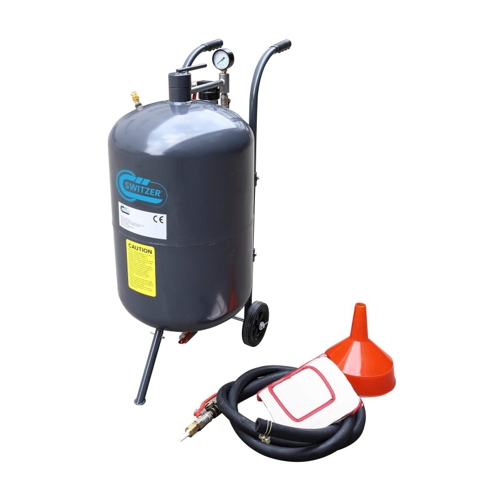
Perfect for cleaning parts on the move or parts that cant fit into a standing sand blaster! Ideal ...Perfect for cleaning parts on the move or parts that cant fit into a standing sand blaster! Ideal to be used at home! or stand out from your competition by offering your customers a mobile service! Excellent value for money. Please note the nozzle gun in the first picture is not correct, this sandblaster comes with the nozzle gun shown in the second gallery picture.
This guide is for users of the Switzer Portable Sand Blaster, offering a mobile solution for cleaning various parts. The key benefit is the ability to clean items on-site or those too large for stationary units. A consideration is understanding the appropriate abrasive media for your specific cleaning tasks. This guide covers setup, usage, and maintenance to help you get the most out of your sand blaster.
All features
Model Part Number
XH-SB20
Brand
Switzer
Extended Product Information
FAQs
What type of abrasive media should I use?
The type of abrasive media depends on the material you are cleaning. Sand, glass beads, and aluminum oxide are common choices. Refer to the user manual for recommendations.
What safety equipment do I need?
You should always wear safety glasses, a respirator, and gloves when operating the sand blaster.
How do I maintain the sand blaster?
Regularly inspect and clean the nozzle, check for blockages, and empty the tank after each use.
What air pressure should I use?
The recommended air pressure varies depending on the abrasive media and the material being cleaned. Consult the user manual for specific guidelines.
Can I use this sand blaster for outdoor projects?
Yes, but ensure proper ventilation and containment to prevent abrasive media from spreading.
Where can I find replacement parts?
Replacement parts can often be found through the manufacturer or at specialized tool suppliers. Check the product documentation for part numbers.
Troubleshooting
Sand blaster is not blasting.
Check for blockages in the nozzle or hose. Ensure the air compressor is providing sufficient pressure. Verify the abrasive media is not wet or clumped.
Uneven blasting pattern.
Check the nozzle for wear or damage. Adjust the air pressure to optimize the blasting pattern.
Low air pressure.
Check the air compressor's output pressure. Check for leaks in the air hose or connections.
Pros and Cons
Pros
Mobile cleaning capabilities
Large capacity for extended use
Versatile for various part types
Cost-effective solution
Easy to set up and use
Cons
Requires abrasive media (sold separately)
May require an air compressor (not included)
Dust collection can be a challenge
Setup, Compatibility & Care
Assembly: Assemble the sand blaster according to the manufacturer's instructions.
Air Compressor: Ensure compatibility with your air compressor; proper air pressure is crucial for performance.
Abrasive Media: Select the appropriate abrasive media (e.g., sand, glass beads, or aluminum oxide) for the task.
Filling: Fill the sand blaster with the chosen abrasive media.
Safety Gear: Always wear safety glasses, a respirator, and gloves.
Operation: Follow the operating instructions provided with the sand blaster.
Care: Regularly clean the nozzle and check for any blockages. Empty and clean the tank after use to prevent clogging.

 B&Q£128.99Visit shop
  The Range£128.99Visit shop


